

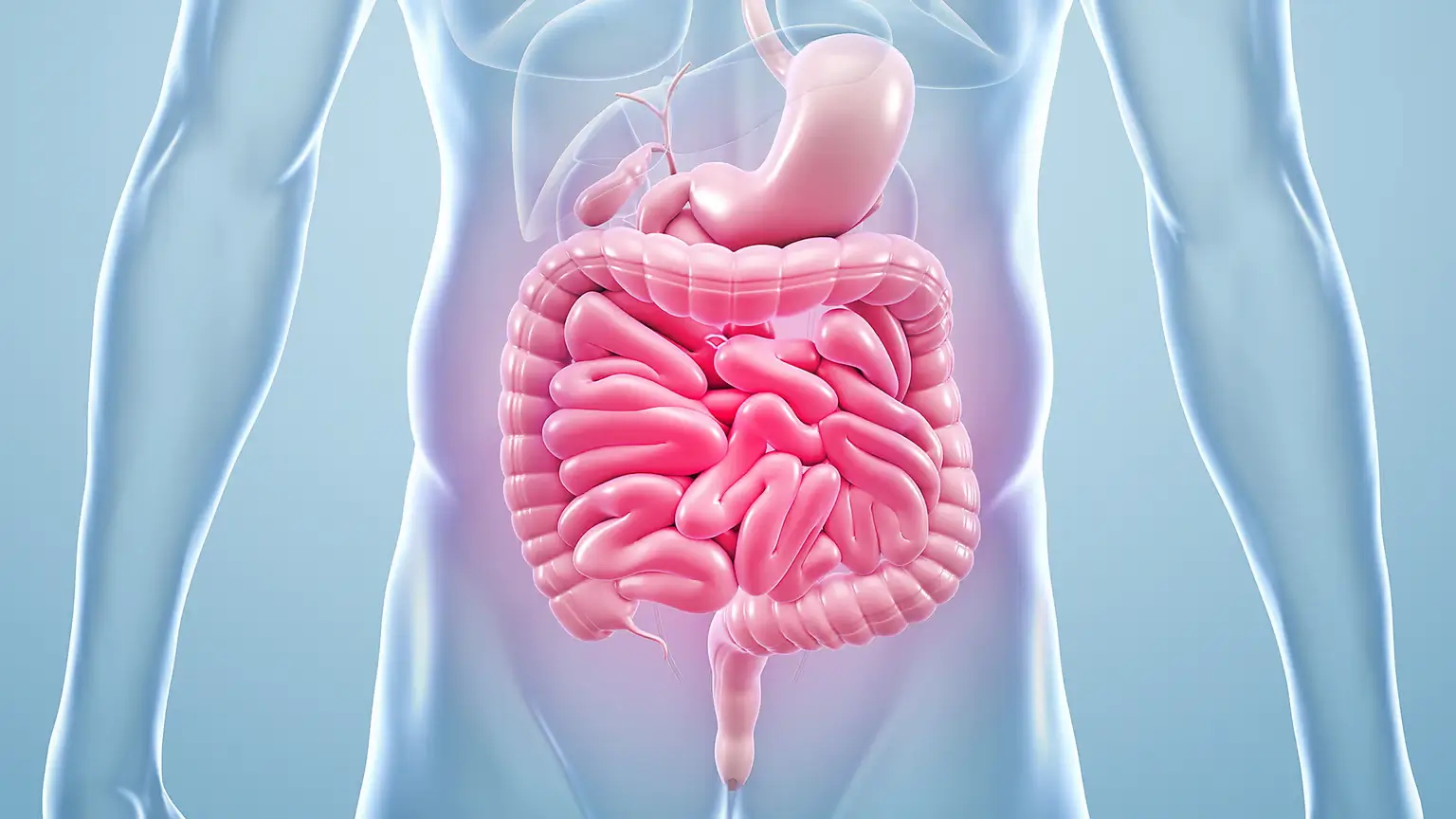
Our body is a complex web of connections, and the gut plays a central role in regulating everything from energy levels and immunity to mood and overall health. Even small imbalances in the gut can have far-reaching effects, making it a key factor in how the body functions as a whole.
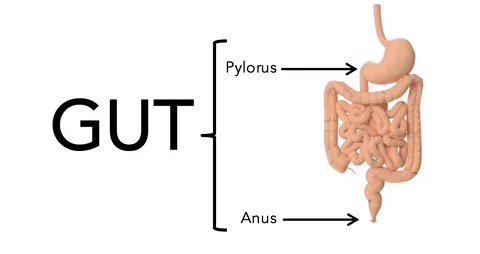
Gut Health and the Gut Microbiome
Your gut includes your stomach, intestines, and colon, which digest food, absorb nutrients, and remove waste.
Gut health generally means having a healthy gut microbiome and few digestive issues. The gut microbiome is made up of about 200 species of bacteria, viruses, and fungi in your large intestine. These microorganisms help break down food into nutrients your body can use. While some bacteria can be harmful, many are beneficial and essential for health.
A diverse microbiome is a key sign of a healthy gut. Gut health can affect both physical and mental wellbeing, and diet plays a major role in shaping the bacteria in your digestive system.
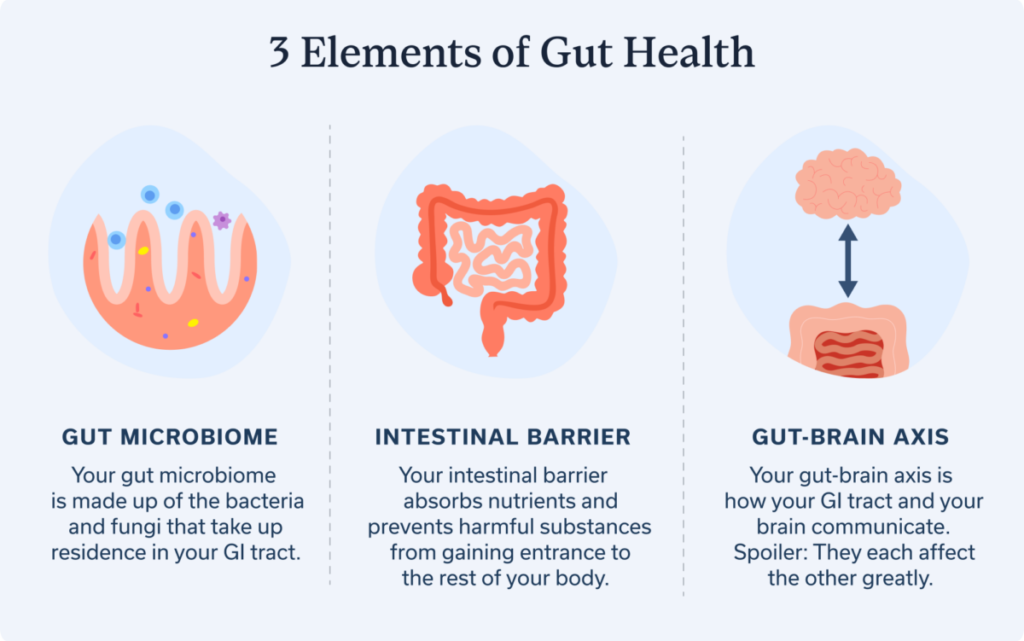
Why Gut Health Is Important
Your gut does more than digest food it supports your whole body by turning what you eat into nutrients your body can use.
Research is showing that a healthy gut microbiome can influence many aspects of health, including:
- Mood and mental health
- Immune system strength
- Hormone balance and metabolism
- Digestive health
- Heart health
- Sleep quality
A diverse mix of gut bacteria usually means a healthier gut. While scientists are still learning, it’s clear that taking care of your gut can benefit your overall health.
Signs of an Unhealthy Gut – your gut microbiome can be disrupted by stress, not getting enough sleep, being inactive, eating too many processed foods, smoking or drinking alcohol, and taking antibiotics.
How to Improve Your Gut Health
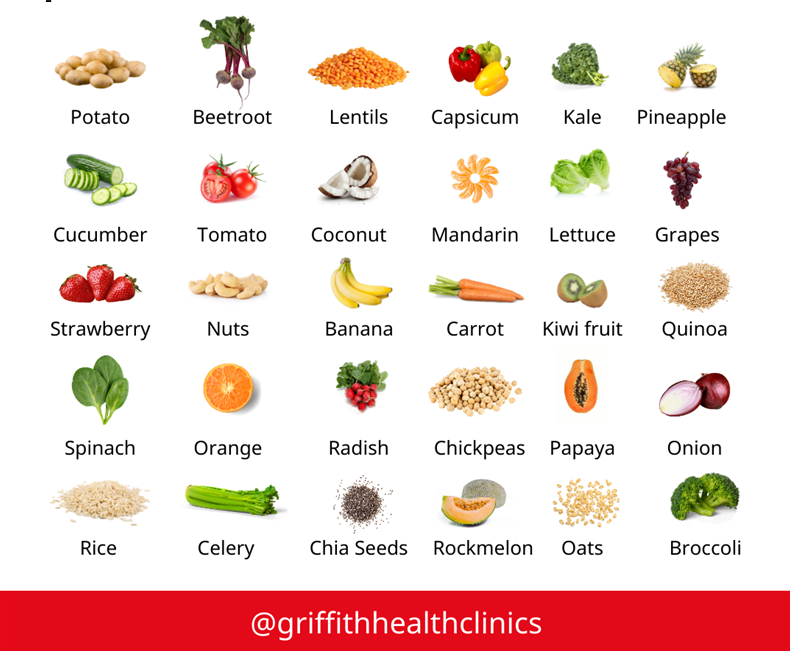
Gut health can be improved through healthy lifestyle and diet choices. Eating enough dietary fibre helps keep digestion regular, lowers the risk of bowel cancer, and feeds beneficial gut bacteria. Whole foods such as fruits, vegetables, legumes, wholegrains, nuts, and seeds support a healthy microbiome and may reduce inflammation. Regular physical activity, good sleep, and managing stress also play an important role in gut health.
Eat a High-Fibre Diet
Fibre supports digestion, nutrient absorption, bowel movement, and stool quality. When gut bacteria break down fibre, they produce substances that may help protect against gut conditions such as bowel cancer. Fibre also reduces the risk of heart disease and type 2 diabetes.
Fibre is only found in plant foods. Adult women should aim for about 25g per day and men about 30g. High-fibre foods include vegetables, fruit, beans and legumes, wholegrain breads and cereals, nuts, and seeds. Some fibres, called prebiotics, are especially helpful because they feed healthy gut bacteria. These are found in foods like leeks, onions, and garlic.
There are no miracle cures for good gut health.
There’s no scientific evidence that individual foods or any other product will rapidly heal an unbalanced gut microbiome. There’s also no scientific evidence that colon cleansing improves health or is beneficial at all.
Research into gut health is relatively new and understanding of this complex topic is developing. Be careful of non-evidence-based information about gut health. Focusing on eating healthily with the tips suggested on this page is the best evidence we have so far.



Leave a Reply